articles/825266990_1073839445641966_3208410418304804306_n.jpg
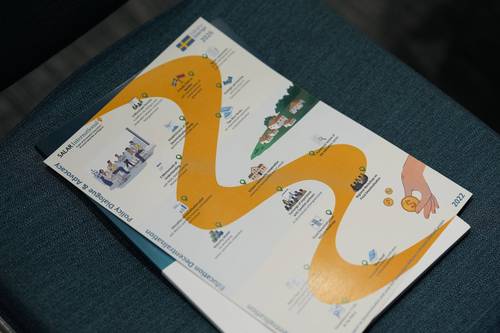
Throughout its implementation, DeaLoG has approached decentralisation from several interconnected angles, combining policy dialogue with practical work in education governance and fiscal decentralisation.
Dialogue around the reform
Effective decentralisation requires continuous dialogue between central and local government. Yet there was no dedicated platform in Armenia where the two levels could regularly come together to discuss the reform, exchange perspectives and address common challenges. DeaLoG responded to this gap by establishing the Annual Municipal Forum, which became a platform for dialogue and cooperation between central and local authorities. At the same time, the project developed a strategic partnership with the Union of Communities of Armenia and formalised cooperation with key government institutions through three Memoranda of Understanding with the Ministry of Territorial Administration and Infrastructure, the Ministry of Education, Science, Culture and Sport, and the Ministry of Finance.
The dialogue also extended beyond Armenia. Three study visits to Sweden gave representatives of central and local government an opportunity to explore Swedish approaches and exchange experience directly with their counterparts.
Making the reform understandable and accessible has also been part of DeaLoG’s work. The Decentralisation Portal was established as a centralised information platform, bringing information on the reform together in one place for both the general public and institutional partners. Today, the Portal reaches a quarterly average of more than 42,000 visitors.
Bringing decentralisation closer to schools and communities
Education became one of the areas where DeaLoG supported the practical application of decentralisation at the local level. The project’s work began by strengthening school–community cooperation, involving 10 municipalities and 37 schools. This experience contributed to the development of a Maturity Model for school–community cooperation and was complemented by a functional review of the education sector, examining the distribution of responsibilities within the system. Building on this work, DeaLoG, together with the Ministry of Education, Science, Culture and Sport and the Ministry of Territorial Administration and Infrastructure, launched an education decentralisation pilot involving three municipalities and three schools.
Here, too, international exchange played a role. Armenian partners had the opportunity to exchange experience with Swedish counterparts on decentralised school governance – connecting discussions about Armenia’s reform with approaches and lessons from another decentralised system.
Supporting fiscal decentralisation
Fiscal decentralisation has been another important area of DeaLoG’s work.
The project supported the development of a Fiscal Decentralisation Reform Roadmap and organised regional workshops, providing opportunities to discuss the reform and incorporate perspectives from the local level.
This work was supported by analysis aimed at strengthening the evidence base for further reform. A comprehensive study on tax policy was conducted, while a Policy Paper and Policy Brief on strengthening fiscal decentralisation and community financing were prepared for the Ministry of Finance.
Taken together, DeaLoG’s work across policy dialogue, education and fiscal decentralisation reflects the interconnected nature of the reform: strengthening local self-government requires not only a clear distribution of responsibilities, but also effective cooperation, institutional capacity and the financial means to exercise those responsibilities.
Looking ahead
As the current phase of DeaLoG draws to a close, the results achieved also point towards the importance of continued engagement in Armenia’s decentralisation and local self-government reforms. Project partners have highlighted the value of maintaining the cooperation and building on the experience and mechanisms developed over the past several years.
This message was also reflected at the institutional level during a recent meeting between Armenia’s Minister of Territorial Administration and Infrastructure Davit Khudatyan and Sweden’s Ambassador to Armenia Eva Sundquist. The Minister highlighted the importance of continuing the successful cooperation with SALAR International in fiscal decentralisation and local self-government, with the aim of further improving the effectiveness of local governance.
As the current phase comes to an end, the partnerships, experience and mechanisms developed through DeaLoG provide a strong basis for continued cooperation in support of Armenia’s decentralisation and local self-government reforms.